Empowering Community Health Cadres in Monitoring Toddler Growth and Development Through The Maternal and Child Health (MCH) Book Counseling for Stunting Screening

https://doi.org/10.33860/pjpm.v6i2.4191
Keywords:
Cadres, MCH book, Growth and DevelopmentAbstract
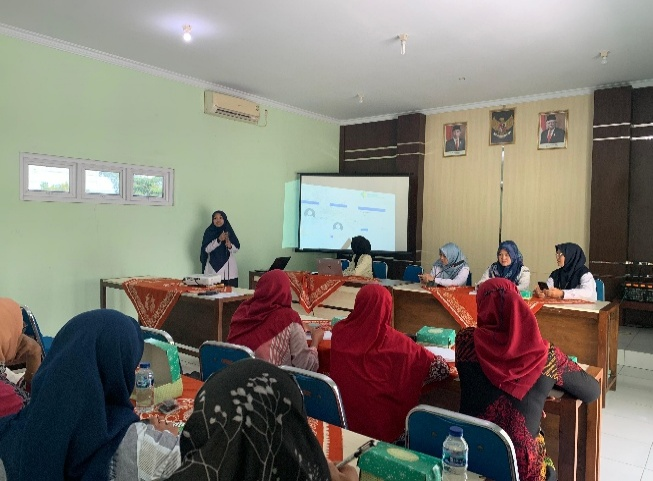
Cadres are the drivers of various aspects of society's social life. Health cadres are one of the partners of health workers who are expected to be able to bridge between health workers and the community, helping improve the health and welfare of people in the region. The principle of community empowerment is applied in health development programs; one example is the Integrated Service Post (Posyandu). Posyandu is an activity that is managed and organized from, by, for, and with the community. The aim of community service activities is to provide education about the KIA book to health cadres. The target of the activity was health cadres, totaling 20 participants. The methods used were lectures, questions, and answers using the KIA book as tools and presentation material about the use of the KIA book. Evaluation of community service activities by assessing pre-test and post-test regarding knowledge of KIA book use by cadres. The post-test was carried out after participants received information about using the KIA book. The results of the activity showed an average pre-test score of 60.71 and an average post-test score of 72.85. The conclusion of this community service activity was that there was an increase in the level of knowledge of health cadres in using KIA books to monitor the growth and development of toddlers as an effort to screen for early stunting.
References
Anwar, K. K., Naningsih, H., & Patongai, N. (2021). Penguatan Kualitas Pelayanan KIA Melalui Peningkatan Pengetahuan Ibu dengan Pelaksanaan Kelas Ibu Balita 0-1 Tahun. Poltekita: Jurnal Pengabdian Masyarakat, 2(2), 49-53.
Anwar, K. K., Nurmiaty, N., & Arum, D. N. S. (2023). Pengaruh Pelatihan Kader terhadap Pengetahuan dan Sikap tentang Pemberian MP-ASI. Health Information: Jurnal Penelitian, 15(2), e751-e751. https://doi.org/https://doi.org/10.36990/hijp.v15i2.751
Anwar, K. K., Syahrianti, S., Sarita, S., & Patongai, N. (2021). Pembinaan Kader Posyandu tentang Perawatan Masa Nifas. Jurnal Inovasi, Pemberdayaan Dan Pengabdian Masyarakat, 1(1), 1-5.
Beal, T., Tumilowicz, A., Sutrisna, A., Izwardy, D., & Neufeld, L. M. (2018). A review of child stunting determinants in Indonesia. Maternal & child nutrition, 14(4), e12617.
Herliani, Y., Rohmatin, E., & Diana, H. (2018). Pemberdayaan Ibu Balita Dalam Kegiatan Kelas Ibu Balita Untuk Meningkatkan Kemampuan Pemantauan Tumbuh Kembang Anak. Prosiding Pengabmas, 1(1), 38-41.
Kemenkes RI. (2018). Modul Pelatihan Bagi Pelatih Kader Kesehatan. Jakarta Selatan: Siakpel. Kemkes.
Kemenkes RI. (2020). Buku Kesehatan Ibu dan Anak. Direktorat Jenderal Kesehatan Masyarakat. https://www.kemkes.go.id/resources/download/pusdatin/buku-kia-2020.pdf
Kemenkes RI. (2022a). Keputusan Menteri Kesehatan Republik Indonesia Nomor HK.01.07/MENKES/1928/2022 Tentang Pedoman Nasional Pelayanan Kedokteran Tata Laksana Stunting. Kementerian Kesehatan Republik Indonesia.
Kemenkes RI. (2022b). Stunting. https://ayosehat.kemkes.go.id/topik-penyakit/defisiensi-nutrisi/stunting
Kemenkes RI. (2023). Panduan Pengelolaan Posyandu Bidang Kesehatan. Jakarta: Kementerian Kesehatan RI.
Kemenkes RI. (2024). Buku kesehatan ibu dan anak (KIA). Direktorat Jenderal Kesehatan Masyarakat, Kementerian Kesehatan RI.
Nurmi, W. I. (2014). Pengaruh Media Modul Petunjuk Pengisian KMS Baru Terhadap Peningkatan Perilaku Kader Posyandu di Wilayah Kerja Puskesmas Perawatan Klandasan III Balikpapan Tahun 2014. Fakultas Kesehatan Masyarakat Universitas Mulawarman.
Osaki, K., Hattori, T., Toda, A., Mulati, E., Hermawan, L., Pritasari, K., Bardosono, S., & Kosen, S. (2019). Maternal and Child Health Handbook use for maternal and child care: a cluster randomized controlled study in rural Java, Indonesia. Journal of Public Health, 41(1), 170-182. https://doi.org/https://doi.org/10.1093/pubmed/fdx175
Prasetyo, W. B. (2019). Kader Posyandu Dinilai Bisa Turunkan Stunting. Berita Satu. https://www.beritasatu.com/news/590863/kader-posyandu-dinilai-bisa-turunkan-stunting
Presiden RI. (2017). Rencana Pembangunan Jangka Menengah Nasional. Peratur Presiden Republik Indonesia Nomor 18, 2020-2024.
Rahmi, L., Darma, I. Y., & Zaimy, S. (2018). Faktor-faktor yang berhubungan dengan Pemanfaatan Buku KIA. Jurnal Ilmu Kesehatan, 2(1), 68-74.
Rosalinna, R., & Astuti, K. E. W. (2022). Pelatihan Kader Dalam Penggunaan Buku KIA Sebagai Upaya Peningkatan Pengetahuan Kesehatan Ibu Hamil. Jurnal Empathy Pengabdian Kepada Masyarakat, 152-159. https://doi.org/https://doi.org/10.37341/jurnalempathy.v0i0.102
Sarbini, N., & Galaupa, R. (2024). Efektifitas Penggunaan Buku Kesehatan Ibu dan Anak (KIA) Terhadap Peningkatan Pengetahuan Ibu Hamil di PMB Nining Sarbini Kota Tasikmalaya. Malahayati Nursing Journal, 6(5), 2036-2047. https://doi.org/https://doi.org/10.33024/mnj.v6i5.11331
Siagian, S. P. (2019). Manajemen Sumber Daya Manusia (Pertama Ce). Bumi Aksara.
Sistiarani, C., & Suratman, N. S. D. (2013). Peran Kader dalam Penggunaan Buku Kesehatan Ibu dan Anak. Jurnal Kesehatan Masyarakat, 8(2), 99-105.
Triguno, Y., Armayanti, L. Y., Pratama, A. A., & Wardana, K. E. L. (2022). Pemberdayaan Suami Dalam Mendukung Ibu Hamil Untuk Menghadapi Persalinan Di Puskesmas Gerokgak I. Jurnal Abdimas ITEKES Bali, 2(1), 63-67. https://doi.org/https://doi.org/10.37294/jai.v2i1.453
Wahyuni, S., Mose, J. C., & Sabarudin, U. (2019). Pengaruh pelatihan kader posyandu dengan modul terintegrasi terhadap peningkatan pengetahuan, sikap dan keikutsertaan kader posyandu. Jurnal Riset Kebidanan Indonesia, 3(2), 95-101. https://doi.org/http://dx.doi.org/10.32536/jrki.v3i2.60
Wijhati, E. R. (2022). Peningkatan kapasitas kader dalam pemanfaatan Buku Kesehatan Ibu dan Anak (KIA). Abdi Geomedisains, 130-138. https://doi.org/https://doi.org/10.23917/abdigeomedisains.v2i2.326
Zolekhah, D., Shanti, E. F. A., & Barokah, L. (2020). Efektivitas Pelatihan Kader Posyandu Dalam Penggunaan Buku KIA Dengan Metode Make a Match. Journal for Quality in Women's Health, 3(1), 9-14. https://doi.org/https://doi.org/10.30994/jqwh.v3il.42
Downloads
Published
How to Cite
Issue
Section
License
Copyright (c) 2025 Dyah Noviawati Setya Arum, Masrif, Sumarah, Linda Nur Wahyuni (Author)

This work is licensed under a Creative Commons Attribution-ShareAlike 4.0 International License.
Authors who publish with Poltekita: Jurnal Pengabdian Masyarakat agree to the following terms:
- Authors retain copyright and grant the journal right of first publication with the work simultaneously licensed under a Creative Commons Attribution License (CC BY-SA 4.0) that allows others to share the work with an acknowledgment of the work's authorship and initial publication in this journal.
- Authors are able to enter into separate, additional contractual arrangements for the non-exclusive distribution of the journal's published version of the work (e.g., post it to an institutional repository or publish it in a book), with an acknowledgment of its initial publication in this journal.
- Authors are permitted and encouraged to post their work online (e.g., in institutional repositories or on their website) prior to and during the submission process, as it can lead to productive exchanges, as well as earlier and greater citation of published work.

This work is licensed under a Creative Commons Attribution-Share Alike 4.0 International License
You are free to:
- Share, copy and redistribute the material in any medium or format
- Adapt, remix, transform, and build upon the material for any purpose, even commercially.
- The licensor cannot revoke these freedoms as long as you follow the license terms.
1.png)