Integrasi Edukasi Infused Water dan Pemilahan Sampah: Model Pengabdian Masyarakat untuk Peningkatan Pengetahuan, Keterampilan, dan Kualitas Hidup.

https://doi.org/10.33860/pjpm.v6i3.4264
Keywords:
Pengetahuan, Pencegahan hipertensi, pemilahan sampahAbstract
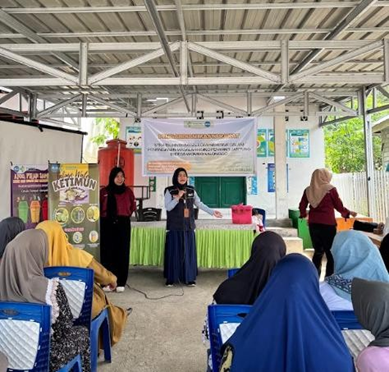
Hypertension and household waste management are significant issues faced by Indonesian communities, particularly in Wombo Kalonggo Village. Most villagers work as farmers, while many women remain at home, and the availability of large land areas has contributed to improper waste management practices. Waste is often discarded into dry rivers or openly burned in household yards. This community service program aimed to enhance integrative community knowledge through education on infused water preparation as an effort to prevent hypertension and education on sorting organic and inorganic waste as an environmental management strategy. The method applied was a participatory approach, involving the community in socialization, hands-on practice, and interactive discussions. Infused water education proved effective in improving community knowledge and awareness of healthy lifestyles, particularly in hypertension prevention. Meanwhile, waste sorting education enhanced villagers’ skills in managing household waste and fostered environmentally friendly behavior. The integration of these two programs created a holistic approach that focused not only on individual health but also on environmental cleanliness. The outcomes of this program showed a significant improvement in knowledge, skills, and awareness among the community after the intervention. This initiative highlights the importance of integrating health and environmental education into a sustainable community service program.
References
Ajzen, I. (1991). The theory of planned behavior. Organizational Behavior and Human Decision Processes, 50(2), 179–211. https://doi.org/10.1016/0749-5978(91)90020-T
Centers for Disease Control and Prevention (CDC). (2022). One Health basics. https://www.cdc.gov/onehealth/basics/index.html
Israel, B. A., Eng, E., Schulz, A. J., & Parker, E. A. (Eds.). (2010). Methods in community-based participatory research for health (2nd ed.). Jossey-Bass.
Kementerian Kesehatan Republik Indonesia. (2020). Riset Kesehatan Dasar 2018: Laporan nasional. Badan Penelitian dan Pengembangan Kesehatan.
Lisnawati, I., Asoka Pramesti, S., & rekan. (2020). Development of a community-based intervention model through infused water consumption for blood pressure control. Jurnal Produksi, 107, 45–55.
Pramesti, S. A. (2023). Alternatif penurun hipertensi alami pada lansia: Infused water timun dan lemon. Jurnal Kesehatan Masyarakat, 211, 12–21.
Rahmawati, N., Handayani, D., & rekan. (2021). Pencegahan hipertensi dengan edukasi dan pemberian infused water serta senam hipertensi. Jurnal Kesehatan Holistik, 883, 33–44.
Rosenstock, I. M. (1974). Historical origins of the health belief model. Health Education Monographs, 2(4), 328–335. https://doi.org/10.1177/109019817400200403
Singhal, A., & Rogers, E. M. (2003). Combating AIDS: Communication strategies in action. SAGE Publications.
United Nations Environment Programme (UNEP). (2021). Waste management outlook for Asia and the Pacific. UNEP Publishing.
Wahyuningsih, S., & rekan. (2019). Sosialisasi pemilahan sampah organik dan non- organik di masyarakat pedesaan. Jurnal Dedikasi, 7(15), 22–30.
Yuliani, R., Pratiwi, H., & rekan. (2020). Pengenalan pengolahan sampah berbasis 3R pada masyarakat pedesaan. Jurnal Pengabdian kepada Masyarakat, 213, 101–112.
Zahra, M., Putri, A., & rekan. (2021). Pengolahan sampah anorganik: Pengabdian masyarakat mahasiswa pada era tatanan kehidupan baru. Jurnal Pengabdian Masyarakat Berkelanjutan, 3929, 56–65.
Ahda, & Ernyasih. (2025). Hubungan Antara Pengelolaan Sampah Rumah Tangga dan Kualitas Kesehatan Lingkungan Permukiman Universitas Muhammadiyah Jakarta , Indonesia. 3(2), 1107–1112.
Apriliani, F., Windusari, Y., & Fajar, N. A. (2024). Systematic Review : Penyuluhan Pengelolaan Sampah Rumah Tangga Dalam Upaya Peningkatan Kesadaran Masyarakat Untuk Menjaga Lingkungan. 8(1), 94–102.
Krisnawan, A. H., Alkindi, F. F., Muttaqin, D., & Setyo, E. (2021). Pemberdayaan Masyarakat dalam Pemanfaatan Tanaman Herbal Indonesia sebagai Minuman Fungsional Peningkat Imunitas Tubuh. 4.
Suarayasa, K., Hidayat, M. I., & Gau, R. (2023). Faktor Resiko Kejadian Hipertensi Pada Lansia. 5(3), 253–258.
Suarayasa, K., Wandira, B. A., & Magan, A. (2022). Perilaku Pencarian Pengobatan Masyarakat Desa Owentumbu Kelurahan Kawatuna Kota Palu Tahun 2020. Jurnal Medical Profession, 4(2).
Sugiarti, L., Lina, R. N., Palupi, D. A., Setyoningsih, H., Wijaya, H. M., Rahmawaty, A., Hidayati, R., Listyarini, D., Choiriyah, N., Lusiana, M. O., & Kurniawan, I. (2023). Pemanfaatan Infused Water Minuman Sehat Sebagai Daya Tahan Tubuh Bersama Pengurus PKK Desa Prambatan Lor Kudus. 6(2), 165–172.
Widjaja, W. (2023). Pelatihan Proses Pengelolaan Sampah Rumah Tangga Menjadi Pakan Ternak. SABAJAYA Jurnal Pengabdian Kepada Masyarakat, 1(2), 15–20. https://doi.org/10.59561/sabajaya.v1i2.14
Published
How to Cite
Issue
Section
License
Copyright (c) 2026 Irsanty Collein, Ismunandar, Fitria Masulili (Author)

This work is licensed under a Creative Commons Attribution-ShareAlike 4.0 International License.
Authors who publish with Poltekita: Jurnal Pengabdian Masyarakat agree to the following terms:
- Authors retain copyright and grant the journal right of first publication with the work simultaneously licensed under a Creative Commons Attribution License (CC BY-SA 4.0) that allows others to share the work with an acknowledgment of the work's authorship and initial publication in this journal.
- Authors are able to enter into separate, additional contractual arrangements for the non-exclusive distribution of the journal's published version of the work (e.g., post it to an institutional repository or publish it in a book), with an acknowledgment of its initial publication in this journal.
- Authors are permitted and encouraged to post their work online (e.g., in institutional repositories or on their website) prior to and during the submission process, as it can lead to productive exchanges, as well as earlier and greater citation of published work.

This work is licensed under a Creative Commons Attribution-Share Alike 4.0 International License
You are free to:
- Share, copy and redistribute the material in any medium or format
- Adapt, remix, transform, and build upon the material for any purpose, even commercially.
- The licensor cannot revoke these freedoms as long as you follow the license terms.
1.png)